

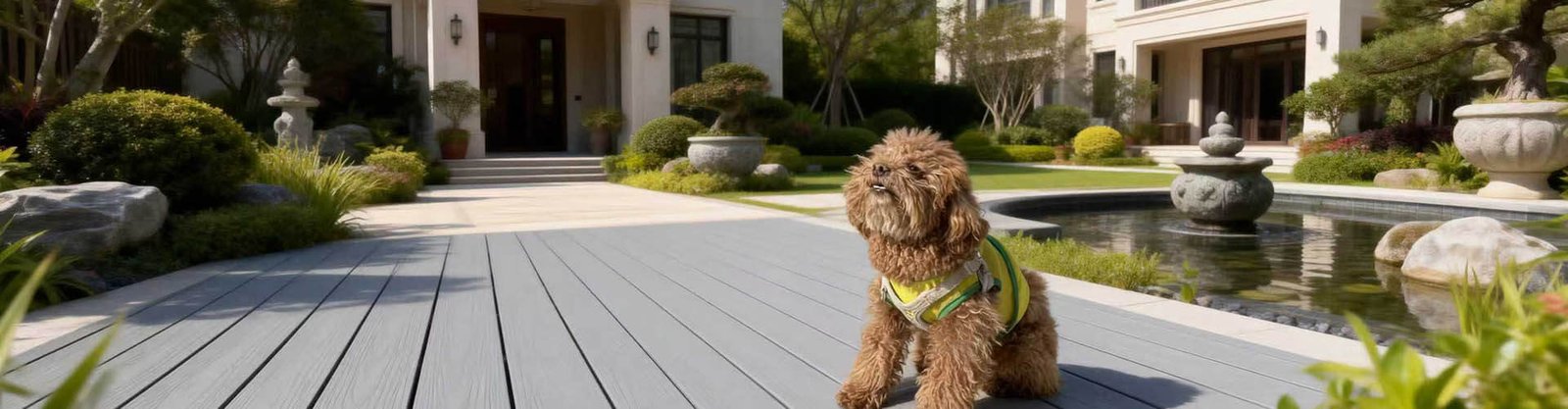
Fencing System

Choose based on the site function:
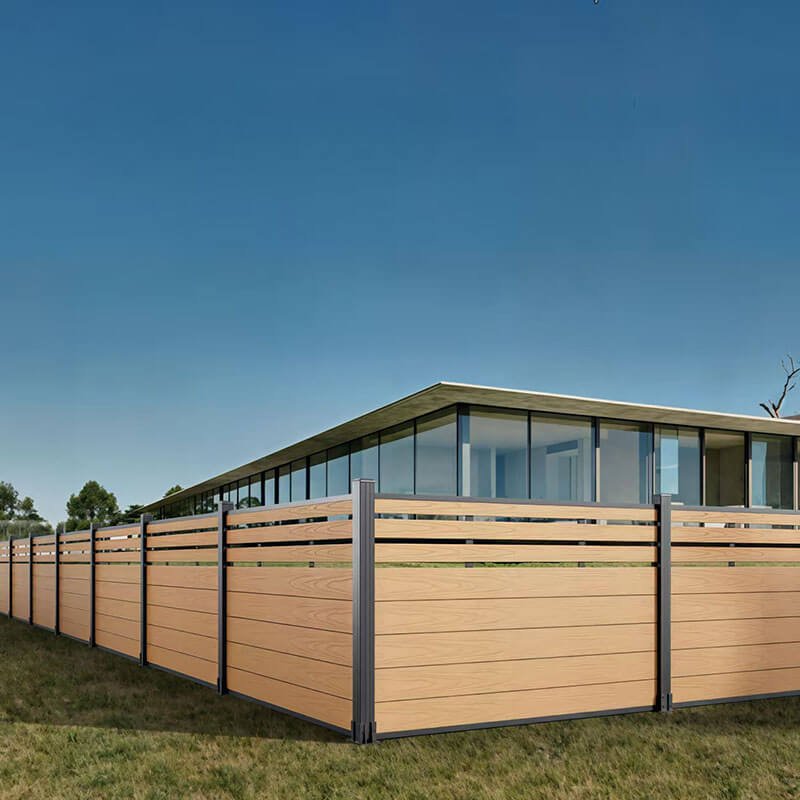
Full Privacy: best for boundary lines, pool areas, neighbors-facing sides.
Semi-Privacy / Slatted: better airflow, less wind pressure, more comfortable for gardens and coastal areas.

Our system is engineered for stability. The aluminum posts are structurally reinforced and can be anchored into concrete. The interlocking tongue-and-groove WPC boards create a solid barrier that resists rattling and vibration during high winds.

Our fencing system uses aluminum posts for corrosion resistance and long-term stability outdoors. Aluminum performs especially well in humid, coastal, or poolside environments.

There are two common professional solutions:
Option 1: Embedded post installation (Recommended for high fences)
Dig foundation hole (approx. 200×400mm, depth adjusted according to fence height and wind load)
Pour concrete to secure the post
Install fence panels after concrete curing
Option 2: Concrete footing + base plate fixing
Cast concrete footing first
Fix aluminum post base with expansion bolts or chemical anchors
Assemble fencing system

It depends on site condition:
If there are existing structural walls or columns on both sides, panels can be fixed directly using channel profiles or brackets.
If installed on open ground, posts are structurally necessary to ensure stability and wind resistance.

Yes.
We provide matching gate systems including:
Custom aluminum frame
WPC infill boards
Complete hardware (hinges & lock system)
Gate can be delivered assembled or installed on site.

Yes.
We offer aluminum posts designed for LED integration.
Cables can be concealed inside the post, ensuring a clean appearance and weather resistance.

Market-proven railing systems are typically reinforced. Ours uses a galvanized steel insert inside for structural strength, with a WPC sleeve outside for the wood-look finish.

Because railing is a safety component. The galvanized steel core provides load-bearing capacity and anti-deformation, while the WPC outer layer provides weather resistance and aesthetics.

The insert is galvanized for corrosion protection. In coastal/high-salt areas, correct fastener selection and sealing details further improve long-term performance.

Decking System

The biggest difference is the “structural behavior.”
WPC decking is a composite plank; stiffness depends on the plank profile and joist spacing.
Alumwood decking uses an aluminum structural core with a wood-look surface, so it’s more stable under load and temperature, with better long-span performance.

Classic WPC is a first-generation composite with a natural, wood-like texture and high slip resistance. Superior Co-extrusion features a 360° protective polymer shield, making it significantly more resistant to stains, scratches, and color fading.

Choose Alumwood for projects requiring a Class A fire rating, lightweight structure, or wide joist spans (e.g., high-rise balconies). Unlike WPC, it is non-combustible and offers superior structural rigidity.

Classic WPC is the most budget-friendly entry option. Superior Co-extrusion sits in the mid-high range due to its advanced protective technology. Alumwood is the premium investment, reflecting its structural metal properties and fire rating.

Alumwood offers the longest service life (30+ years) as aluminum does not degrade. Superior Co-extrusion follows with a 20 year warranty against rot and fading. Classic WPC typically offers a reliable 10 year service life.

Absolutely. Both our Co-extrusion and Alumwood series are designed with anti-slip textures (R10 rating). They are water-resistant and splinter-free, ensuring safety for barefoot traffic even when wet.

No specialized heavy machinery is needed. Our decking utilizes a hidden clip system that secures boards to the joists. This allows for uniform spacing and a clean, screw-free surface finish.

Yes, all composites expand with heat. It is crucial to leave proper expansion gaps (typically 3-5mm) at the butt joints and where the deck meets fixed objects like walls.

Wall Cladding

The choice depends on your project needs:
Choose WPC (Standard) for residential renovations where cost-efficiency and a softer wood touch are priorities.
Choose Alumwood (Premium) for commercial projects, high-rise buildings, or ceilings that require Class A Fire Rating, lightweight safety, and razor-sharp architectural lines.

Alumwood. Its aluminum core is non-combustible and significantly lighter than WPC, reducing structural load while offering superior strength against high-altitude winds.

While both are made from the same high-quality WPC material, they differ in design and application:
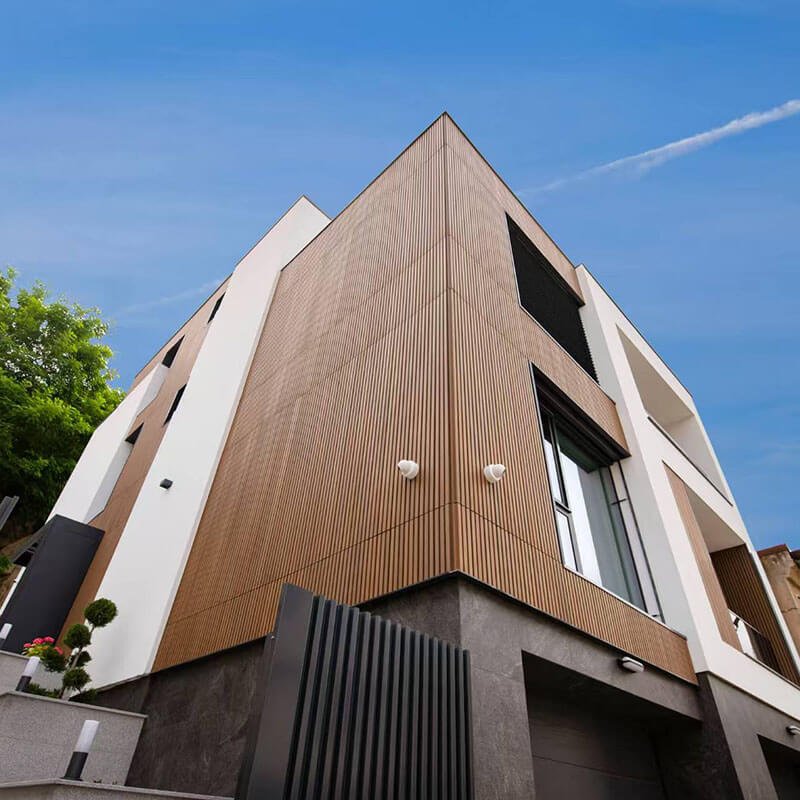
Fluted Cladding features a 3D linear structure. It highlights strong vertical lines and shadow effects, making it highly decorative and ideal for feature walls.
Wall Siding features a flat or wide panel structure. It emphasizes overall integrity and uniformity, making it more suitable for large-scale engineering projects and full-facade coverage.

We provide matching L-shaped corner trims (in both aluminum and WPC) that cover the cut edges, ensuring a neat, professional finish for external and internal corners.

Never. Unlike natural timber cladding which turns gray and requires oiling, our products maintain their color and finish for years without any painting or sealing.

Yes. The plastic content in WPC makes it impervious to termites, carpenter ants, and other wood-boring insects.

Absolutely. Our products are formaldehyde-free and emit no harmful VOCs, making them safe and stylish for interior applications like lobbies, offices, and living rooms.

Modular & DIY

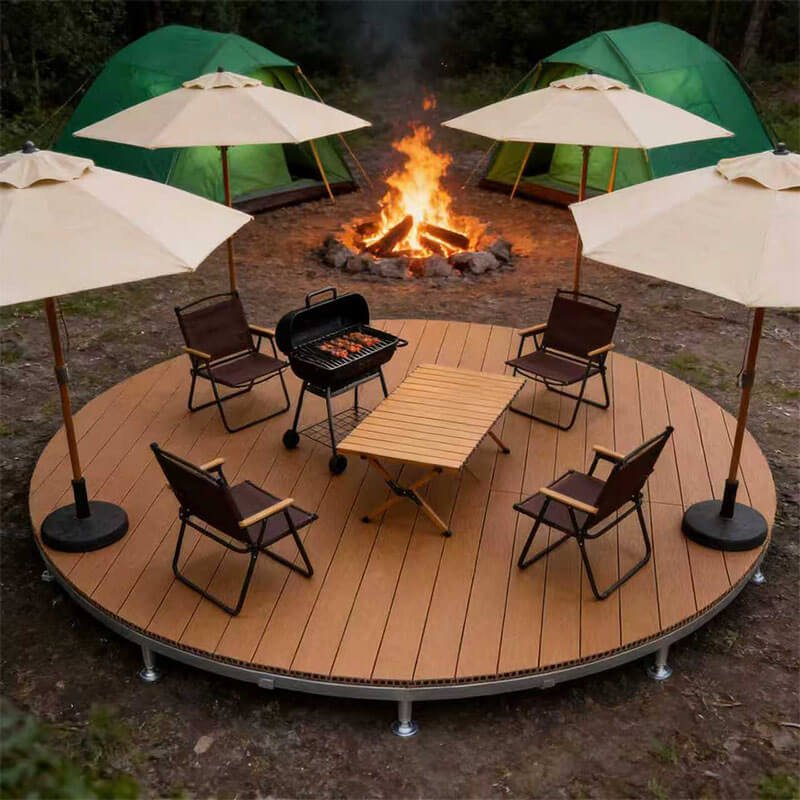
Camping platform / temporary outdoor stage / uneven lawn: Prefabricated WPC Decking System
Restaurant terrace / flat rooftop / high-use flat areas: Alumwood Deck Tiles
Balcony / patio / small home project: DIY WPC Deck Tiles

  • Prefabricated WPC Decking System – Yes, suitable for uneven grass or soil.
  • DIY WPC Deck Tiles – No, requires flat and stable surface.
  • Alumwood Deck Tiles – Recommended for flat and solid surfaces.

No traditional joists are required.

  • Deck tiles are installed directly on flat and stable surfaces.
  • Prefabricated systems use adjustable pedestals for leveling.

Yes.
Suitable for concrete slabs, ceramic tiles, waterproof membranes, and rooftop surfaces.
The substrate must be flat and load-bearing.

Yes.
All modular systems are demountable.
Tiles or panels can be lifted individually for maintenance or access to the substrate.

Load capacity depends on model:

  • DIY tiles – suitable for residential foot traffic
  • Alumwood tiles – higher structural strength
  • Prefabricated system – engineered for commercial application

Technical data sheets are available upon request.

Yes.
Especially the Prefabricated WPC Decking System with pedestal support, which allows drainage, cable routing, and height adjustment.

Yes.
Modular design makes them ideal for exhibition floors, outdoor events, and temporary platforms.

Spacing between boards and open base structures allow natural drainage.
Raised systems provide continuous airflow and moisture evaporation.